Cancer treatment in Denmark faces several challenges, including the demographic trend of an aging population, which is likely to lead to an increase in age-associated cancers. Additionally, demographic changes will result in relatively fewer potential healthcare professionals available to treat the growing patient population. Cancer treatment itself has also become more complex over time, often involving more and prolonged treatment for each patient, which further intensifies the issue.
The overall specialization that the healthcare system has undergone in recent decades has undoubtedly improved the quality of treatment in many areas. However, this specialization has also had the unfortunate consequence that many people now have quite a long journey to their treatment center and must visit the hospital more frequently due to the increased complexity and duration of their treatment.
The government is aware of these challenges and addresses them in its 2023 healthcare package (Cancer Plan V): “The healthcare package includes immediate investments in an extraordinary cancer effort and Cancer Plan V. This permanent boost aims to strengthen the healthcare system, including investments in local healthcare, improved quality at the municipal level, improved continuity in patient care, and treatment closer to patients’ homes. It can also facilitate new treatment methods, new technologies, and new drugs. The government further prioritizes reduction of geographic and social inequality. Likewise, Health Minister, Sofie Løhde stated in a press release on November 14, 2023, “Progress is continuously being made in the cancer field, and in recent years, we have seen examples where artificial intelligence and precision medicine have improved cancer diagnoses and treatment. We must leverage these technological advances, which is why Cancer Plan V will also focus on new technologies that, in addition to strengthening cancer treatment, will help us make the most of our hospital capacity and healthcare staff resources.”
The purpose of the Center for Home-Based Treatment is to assist in addressing these challenges, using the tools outlined by the government. Our goal is to bring cancer treatment as close to the patients’ homes as possible, so that they experience the healthcare system as something that adapts to them, rather than vice versa. Implementing new technology will ensure that this shift can occur without compromising the quality improvements that increased specialization has provided. A close and integrated collaboration between hospitals, home healthcare, general practitioners, and patients will promote social equity in the health care system. Additionally, a systematic and scientific approach will ensure that the proposed solutions are evidence-based and safe, truly adding value for patients while making better use of society’s resources.
The Center for Home-Based Treatment is already in the process of testing and validating chemotherapy treatments administered at home or at local healthcare centers, either by the patients themselves or by local healthcare professionals. The treatment is still prescribed and monitored by the hospital. Additionally, the Center for Home-Based Treatment is implementing new technology, including the use of smartphones for reporting side effects, after which algorithms determine whether a dose adjustment is required or if the next dose can be sent directly to the patient’s home.
The Center for Home-Based Treatment has already published two peer-reviewed articles in this field: “Home is Best. Self-administration of Subcutaneous Bortezomib at Home in Patients with Multiple Myeloma - A Mixed Method Study,” Eur J Oncol Nurs. October 2022, and “Making Decisions for Follow-up Chemotherapy Based on Digital Patient-Reported Outcomes Data in Patients with Multiple Myeloma and Other M Protein Diseases – A Mixed Method Study,” Eur J Oncol Nurs. February 2024.
The Center for Home Treatment is also participating in two additional research projects involving home-based cancer treatment with clinical trial numbers NCT05620238 and NCT05306587, and the Center is in the process of establishing a third project (NCT06015542). The Center has secured external funding from three multinational pharmaceutical companies interested in testing their products in a validated home treatment setup, and further negotiations are ongoing.
The Center for Home Treatment won the 2023 Athena Award for Innovative Nursing with the following reasoning: "For cancer patients, a significant portion of everyday life can be spent traveling to and from the hospital—time that could otherwise be spent at home, at work, or with loved ones. Home treatment gives patients greater freedom during long treatment trajectories. Patients are trained to administer their own treatments, or they can receive visits from a home nurse to provide the treatment. As part of the home treatment program, the department's myeloma team has made it possible for patients to record side effects via the app, 'My Hospital' before their next treatment. This saves time for both patients and staff, as they can communicate beforehand, ensuring that the staff knows whether the patient is ready or not, and preventing the patient from making a trip to the hospital in vain."
The tasks at the Center for Home Treatment are twofold:
1. To set up and test hypotheses on where new technology can be practically applied, with the patients and their relatives at the center of the treatment, and where collaboration between the specialized healthcare system, primary healthcare, and the patients is involved in a close partnership for each treatment.
This is done by establishing scientific protocols that test each initiative to ensure that it can be executed in a medically safe and responsible manner, that it provides increased freedom and autonomy for the patient, and that it offers relief to the Danish healthcare system. The protocols should therefore preferably address all three of these aspects. They will include medical data, qualitative patient experiences, and economic evaluations. The Center for Home Treatment will accomplish this by securing funding from pharmaceutical companies and foundations, to test hypotheses where the potential benefits for the citizen or society are deemed significant. The tested hypotheses are expected to be published in international peer-reviewed journals.
2. Disseminate and share the generated knowledge nation-wide and with other specialties.
So far, the Center for Home Treatment has primarily worked with patients suffering from bone marrow cancer (multiple myeloma) affiliated with Odense University Hospital. We have tested, validated, and published that even elderly patients with incurable cancer can self-administer part of their chemotherapy, report side effects, and schedule their next treatment via an app. Importantly, we have found that they prefer this solution going forward over the previous setup. As a result, self-administration has become the standard and is now offered to all patients in the Hematology Department who receive the tested treatments. These positive outcomes must be expanded to ensure that they are not limited to Odense University Hospital but can be implemented nationwide.
We started our trials with some of the most critically ill patients in the country, as we believed the potential for home treatment was greatest in this group. We discovered that even patients over 80 years old with incurable cancer could—and, importantly, preferred to—take control of as much of their treatment as possible. It is therefore obvious that this model will not only work for multiple myeloma, but should also be expanded to other types of cancer.
Knowledge sharing will be done through lectures and workshops for other hospitals and departments. This will include offering training placements for doctors, nurses, healthcare assistants and other healthcare professionals at the department allowing them to gain hands-on experience with home treatment. It will also involve creating a knowledge center that will serve as a professional partner for other departments and regions. Additionally, we aim to establish formal collaborations with various patient associations to keep the focus on patient-centered care. Last, but not least, we plan to build partnerships with the Danish medtech industry, academic institutions specializing in health economics, and the political-administrative system, so that Denmark can stay ahead in developing and implementing future technological healthcare solutions in a cost-effective way that benefits society as well as patients and their quality of life.
ERICA is a development project testing self-administration of Elranatamab, an injection given under the skin of the abdomen. This project is exclusively offered by OUH. Throughout the project, you will be asked to complete various forms in the Mit Sygehus app, and at the end of the project, you will be invited to participate in a phone interview. After being trained on how to administer the medication yourself, you will need to visit OUH approximately every fourth treatment – the remaining treatments can be done at home. The project spans six cycles; if you still require Elranatamab after this period, treatment will continue at the Hematology Outpatient Clinic.
Elranatamab is a bispecific antibody that works by activating the immune system to fight the cancer. It is approved in both Europe and the US as an effective treatment for multiple myeloma.
The most common side effects of Elranatamab include infections, over-activation of the immune system (resulting in symptoms like fever), and effects on brain function, such as headache and confusion. We are experienced in managing these side effects and have medication available to address them.
Velcade at home
- OUH Innovation Day. Oral presentation. October 2021
- Danish Research Network for Nurses in Oncology (DFSK). National virtual conference. Oral presentation. April 2022
- International Conference on Integrated Care (ICIC), Odense. Digital poster and oral presentation. May 2022
- OUH Nursing Symposium, Odense. Poster. September 2022
Fit for treatment
- OUH Innovation Day. JK. Oral presentation. September 2023
- Abstract published in the online Abstract Book, a supplement of HemaSphere (EHA's official journal), the EHA Library, and the Congress platform. April 2023
- Focus on Research (internal symposium, Hematology Department, OUH). Oral presentation. October 2023
- Best Practice Nordic. Using PRO Data to Assess Treatment Readiness in Multiple Myeloma. October 2024
- National Network Meeting on Home Treatment for Hematology Nurses. Oral presentation. September 2024
- Green Light for Anti-Neoplastic Treatment Using PRO Data – A Mixed-Method Study. NMSG School for Nurses in Hematology, oral presentation, September 2023
DAPHNE
- Home-Based Daratumumab Treatment Guided by Patient-Reported Outcome Data in Patients with Multiple Myeloma. Poster presentation, Danish Cancer Research Days, September 2024
- Daratumumab Treatment in Patients’ Own Homes. Poster presentation, International Myeloma Society, September 2024
Other
- Oral presentation on Home Treatment at NMSG. September 2024
- Athena Award “Antineoplastic Treatment of Hematological Cancers in Patients’ Own Homes.” The Danish Nurses’ Organization
NCT06015542: Self-administration of Subcutaneous Elranatamab in the Patients' Homes
NCT05620238: Home Treatment With Carfilzomib in Patients With Multiple Myeloma
NCT05306587: Daratumumab Provided at Home Experience An Open, Single-center, Mixed-method Project.
NCT05163405: Perspectives of Subcutaneous Velcade at Home of Patients With Myeloma.
Home is best. Self-administration of subcutaneous Bortezomib at home in patients with multiple myeloma - A mixed method study https://doi.org/10.1016/j.ejon.2022.102199
Making decisions for follow-up chemotherapy based on digital patient reported outcomes data in patients with multiple myeloma and other M protein diseases – A mixed method study https://doi.org/10.1016/j.ejon.2023.102455
Article in "Myelomatosebladet" september 2024: Hjemmebehandling - vejen frem ("Home treatment - the way forward") https://flipflashpages.uniflip.com/3/614891/1134444/pub/html5.html#page/2
Article in European Journal of Haematology: Home-Based Daratumumab in Patients With Multiple Myeloma, der er blevet publiceret i European Journal of Haematology https://pubmed.ncbi.nlm.nih.gov/40165411/
Below, you can see the questionnaire and algorithm for the For for Treatment project.
DCCC - Danish Comprehensive Cancer Center has granted funding for the Interdisciplinary Hematological Research Network to prepare a multi-perspective national survey of home treatment for patients with hematological cancer. We expect the survey to provide a deeper understanding of the advantages and disadvantages associated with selected home treatments for patients with hematological cancer, nation-wide. Specifically, the study will investigate which organizational structures generate the greatest benefits, both economically and resource-wise, while ensuring high quality of life and satisfaction among patients and their families.
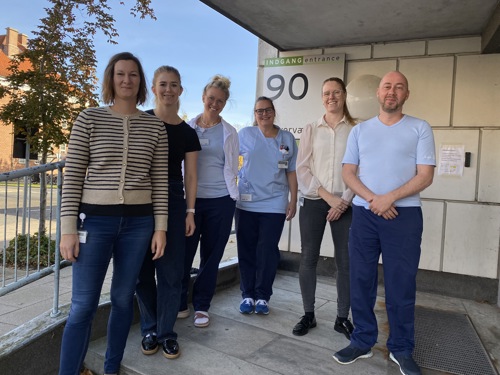
The team, from left to right: Study coordinator, Jannie Kirkegaard, HTA consultant, Maja Kjær Rasmussen; nurse, Mette Kjær Hansen; nurse, Janne Aamand; study coordinator, Tine Rosenberg; and consultant, Thomas Lund
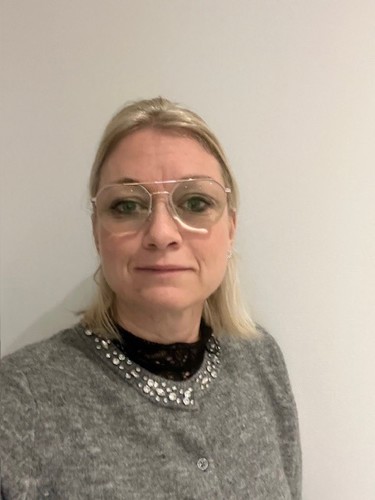
Team member from the Outpatient Clinic for Blood Diseases, Sønderborg: Lone Wede Holm, clinical nursing specialist in Hematology.
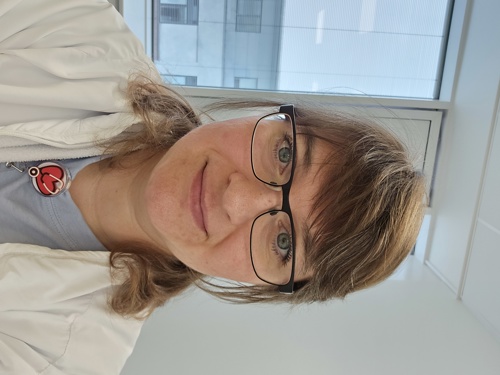
Team member from the Medical Department of Gastroenterology, Rheumatology, Hematology, and Palliative Care, Blood Diseases, Esbjerg Hospital: Consultant Galyna Chernyshova.
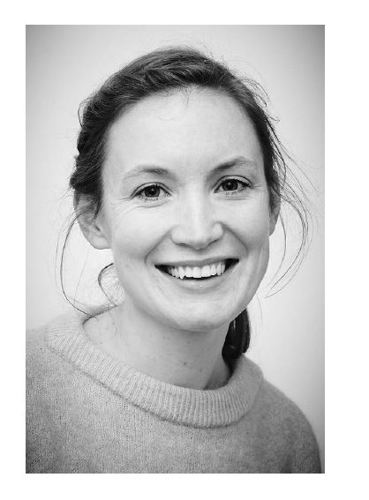
Team member from the Medical Department, Vejle Hospital, consultant Katrine Fladeland Iversen.